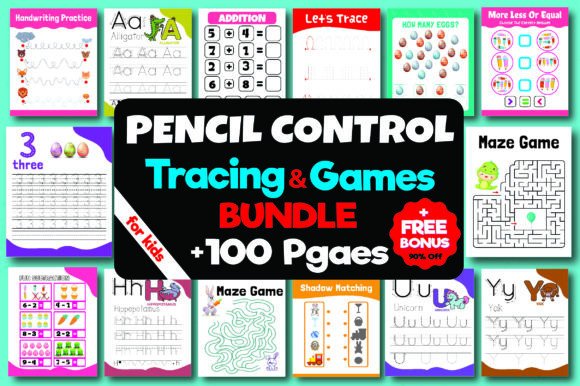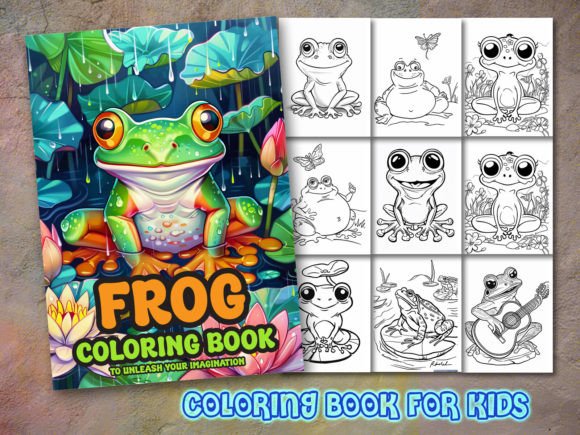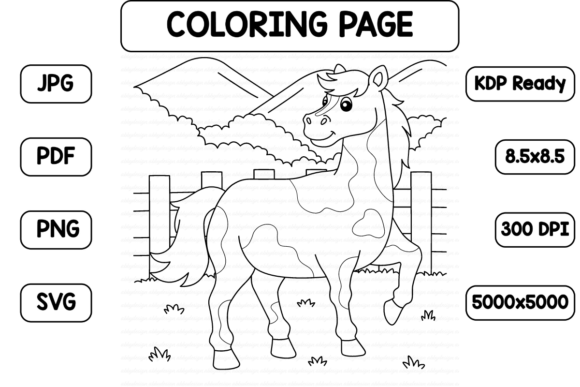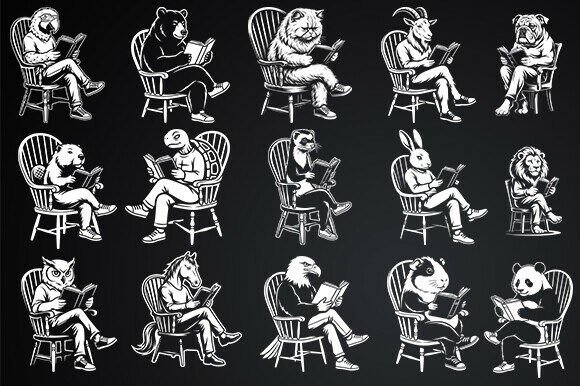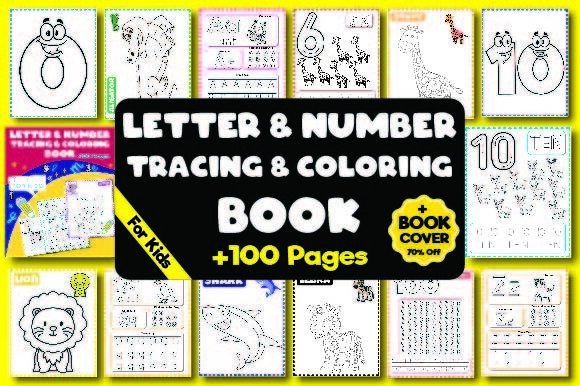
Letter Number Tracing and Coloring BOOK: Graphics for Teaching Materials
First Impression: Playful, Warm, and Intentionally Imperfect
Opening the Letter Number Tracing and Coloring BOOK, I immediately notice its hand-drawn charm — slightly uneven lines, gentle curves, and a soft, approachable rhythm. It doesn’t scream “corporate classroom” or “digital perfection.” Instead, it evokes a local children’s bookstore hosting story hour, a handmade soap brand launching a “Little Learners” bath set, or a neighborhood bakery releasing seasonal “ABC Cookies” with letter-shaped icing. The mood is friendly, nurturing, and quietly confident — not loud or cartoonish, but warmly human. It suggests a brand personality that values connection over polish: think organic skincare for moms, indie Montessori toy shops, or floral studios offering “Grow & Learn” gift bundles.
Where This Graphic Design Asset Fits Real Local Business Projects
I recently used the Letter Number Tracing and Coloring BOOK assets to refresh packaging for a small-batch candle brand called “Kindle & Kindergarten” — a line of soy candles named after early literacy milestones (e.g., “A is for Applewood,” “3 is for Three-Wick”). The tracing-style letters became subtle borders on jar labels, delicate accents on hang tags, and joyful focal points in Instagram carousel posts showing kids “matching scents to letters.” It worked because the asset supported, rather than overpowered, their existing brand identity: earthy tones, linen textures, and quiet storytelling.
Real-World Applications Across Touchpoints
- Product labels: Trace-inspired lettering adds warmth to ingredient lists or scent descriptions without sacrificing legibility.
- Packaging design: Use as a repeating border on kraft boxes or as a foil-stamped accent on matte-finish pouches.
- Social media graphics: Layer traced numbers over pastel gradients for “Back to School” promo banners or limited-edition drops.
- Printable inserts: Include simplified tracing pages inside subscription boxes (e.g., “Learn Your ABCs While You Sip” tea kits).
- Thank-you cards & stickers: Scale down single characters into custom die-cut stickers for boutique purchases or farmers’ market bags.
- Seasonal campaign visuals: Pair “5” and “Pumpkin” or “10” and “Trees” for fall-themed home decor launches.
How It Strengthens Small Business Branding — Beyond Decoration
This isn’t just clipart. Used thoughtfully, the Letter Number Tracing and Coloring BOOK supports foundational branding goals: it creates a stronger first impression by signaling care and intentionality; improves product recognition through consistent, ownable visual language; establishes clearer visual hierarchy when layered with clean typography; and builds customer trust by reflecting authenticity — especially for handmade businesses and local educators. On shelf or screen, it helps products stand out not through flash, but through feeling familiar, thoughtful, and human-scaled.
Best Uses: Where the Asset Shines
The Letter Number Tracing and Coloring BOOK excels in contexts where warmth and approachability are strategic advantages: product mockups for Etsy sellers, decorative brand elements on café menu boards, hero graphics for preschool-aligned product launches, seasonal packaging for boutique toy lines, and social media campaign graphics targeting caregivers and early educators. Its organic flow makes it ideal for printable design projects — think branded activity sheets for coffee shop loyalty programs (“Sip & Spell”) or welcome kits for new parents at a holistic wellness studio.
Cautions: Where Simplicity Wins Over Style
Resist using these graphics in formal corporate branding, legal disclaimers, or dense ingredient-heavy layouts — they’re not built for precision or neutrality. Avoid them on very small labels (under 1.5” height), crowded packaging panels, or low-contrast backgrounds where line weight disappears. Luxury minimalist brands — say, a high-end ceramic studio or monochrome apparel label — may find the style too literal or busy. And never assume automatic compatibility: if the tracing lines compete with your core messaging or logo, scale back or simplify.
Practical Brand Designer Notes — Tested in Studio & Field
Before finalizing any client work, I always run these checks:
- Test the Letter Number Tracing and Coloring BOOK on real packaging mockups — not just digital previews.
- Check black-and-white usage: does the line art retain character when printed on uncoated paper or embroidered?
- Preview at actual label size — some delicate strokes vanish below 12pt.
- Test alongside your brand’s full type system: serif, sans serif, script, handwritten, and display fonts.
- Verify PNG transparency and SVG vector editability — crucial for precise placement in Canva templates or Adobe workflows.
- Confirm commercial license covers physical product sales, not just digital use — essential for food labels or retail packaging.
- Compare against competitor packaging: does it elevate your distinct voice, or blend in?
- Review print quality at 300dpi — raster assets must hold detail for professional offset or digital printing.
A Strategic Choice for Creative Entrepreneurs
For local business owners, handmade sellers, and creative entrepreneurs building real-world brands — not just digital concepts — the Letter Number Tracing and Coloring BOOK is more than a teaching tool. It’s a versatile graphic design asset that bridges education and emotion, learning and lifestyle. When aligned with authentic brand values and applied with intention across packaging design, social media graphics, and customer-facing marketing visuals, it becomes part of a cohesive, trustworthy, and deeply human brand identity. That’s the power of choosing design assets not just for what they are, but for how they serve your people — and your purpose.