Frog Coloring Page and Coloring Book: Graphics & Coloring Pages Amp
First Impression: Whimsical, Handmade, and Playfully Earthy
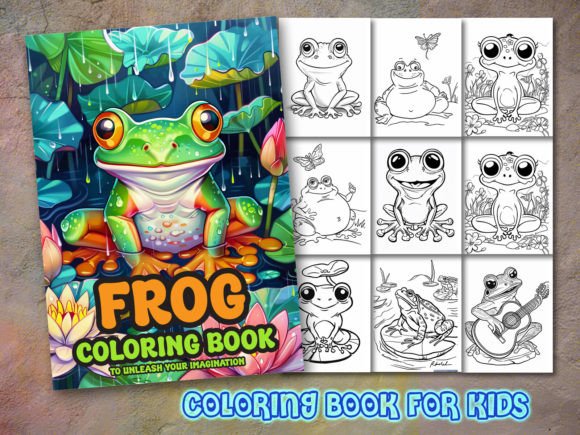
As a brand designer who’s developed visual identities for over a dozen local businesses—from lavender soap studios to seasonal farmers’ market bakeries—I opened Frog Coloring Page and Coloring Book expecting cheerful simplicity. What stood out immediately was its organic line work and generous negative space—neither overly tight nor cartoonish. It reads as hand-drawn but clean, suggesting authenticity without sacrificing polish. This isn’t corporate clipart; it’s a thoughtful graphic design asset that leans into gentle playfulness, quiet curiosity, and subtle nature reverence. For a handmade business—say, a small-batch candle brand using rainwater-infused soy wax or a children’s bookshop with locally illustrated titles—it signals warmth, intentionality, and tactile charm. It feels friendly, not frantic; grounded, not generic.
Where It Strengthens Real Local Business Branding
This Frog Coloring Page and Coloring Book asset shines where small business branding needs personality *and* practicality. Imagine it reimagined as a custom stamp on kraft paper hang tags for a boutique florist’s spring bouquet wraps—or scaled down as a delicate watermark behind the ingredient list on a cold-pressed juice label. Used thoughtfully, it elevates packaging design by adding narrative texture without clutter. A coffee shop launching a “Frog Pond Latte” seasonal special could integrate the frog outline into a reusable cup sleeve illustration, then echo it in Instagram Stories and printed menu graphics. For a skincare brand focused on native wetland botanicals, the same asset becomes part of an elegant, monochrome product mockup—printed in soft sage ink on recycled cardstock. That kind of consistency builds brand identity across touchpoints, reinforcing recognition and deepening emotional connection.
Practical Applications Across Touchpoints
- Product labels & packaging accents: Works beautifully as a border element on soap boxes or as a corner motif on tea bag tags—especially when paired with serif or handwritten fonts for contrast.
- Thank-you cards & printable inserts: Its high-resolution PNG transparency allows seamless layering over textured backgrounds—ideal for branded thank-you notes tucked into handmade soap orders.
- Social media graphics: Scales cleanly for Instagram carousels (e.g., “Meet Our Ingredients” series) or Pinterest-ready quote cards with soft pastel overlays.
- Seasonal campaign visuals: Perfect for spring launches—think Easter pop-ups, garden-themed markets, or Earth Day promotions—without feeling dated or overly literal.
- Business cards & stickers: When simplified to a single-line version (test your SVG/vector editability first), it adds memorable character to minimalist stationery.
Where It Builds Trust—and Where to Proceed Thoughtfully
Used well, Frog Coloring Page and Coloring Book supports stronger first impressions, clearer visual hierarchy, and more consistent small business branding. Customers subconsciously associate intentional illustration with care—whether they’re scanning a crowded farmers’ market table or scrolling through Etsy listings. That translates directly to improved shelf appeal and perceived value. But context is everything. Avoid placing it front-and-center on formal legal disclaimers, dense ingredient panels, or ultra-minimalist luxury packaging where restraint defines the brand voice. It also risks visual competition on small labels (<5mm height) or low-contrast backgrounds (e.g., light gray text on pale mint). If your brand relies heavily on typography-driven elegance—like a fine letterpress stationer or a premium olive oil line—this asset should support, not dominate.
Designer Notes You’ll Actually Use
Before committing to Frog Coloring Page and Coloring Book for client work or your own local business, run these checks:
- Test on real packaging mockups—not just digital previews. Print a sample label at actual size and hold it beside your product.
- Check black-and-white usage. Does the line weight hold up when converted? Some coloring pages lose definition in grayscale printing.
- Preview at 100% scale on small labels—especially if used on jar lids or tea tins.
- Test alongside your brand colors. Does it harmonize with your primary palette—or clash with warm undertones?
- Compare with competitor packaging. Does it differentiate your offering, or blend into the background?
- Review print quality specs. Confirm DPI meets commercial printing standards (300+ for physical goods).
- Inspect PNG transparency and SVG vector editability. Can you isolate limbs or adjust stroke width without distortion?
- Test font pairings. Try it beside serif (e.g., Playfair Display), sans serif (e.g., Inter), script (e.g., Pacifico), and display fonts (e.g., Bungee) to see how it anchors or competes.
- Verify commercial licensing. Ensure it permits use in product labels, packaging design, and resale—not just personal or editorial projects.
Final Thought: A Thoughtful Tool, Not a Shortcut
Frog Coloring Page and Coloring Book isn’t a magic bullet—but in the hands of a detail-oriented small business owner or creative entrepreneur, it’s a versatile, mood-aligned design asset. Whether you're designing for a children’s toy shop, a botanical apothecary, or a community-centered bakery, this graphic can add warmth, storytelling, and visual cohesion—if treated with the same care you’d give your logo design or ingredient sourcing. It belongs in your toolkit alongside your favorite typefaces and color palettes—not as filler, but as intentional punctuation. When used with purpose, it doesn’t just decorate. It communicates.