Sea Shell Silhouettes: Graphics for Crafts & Coastal Branding
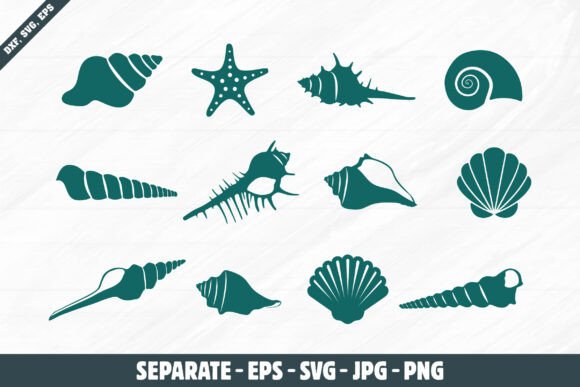
As a graphic designer who’s built brand identities for handmade soap studios, boutique beachwear labels, and seasonal coastal pop-ups, I opened Sea Shell Silhouettes, Sea Shell Svg expecting charm—but what stood out immediately was its quiet versatility. These aren’t cartoonish or overly stylized shells; they’re clean, organic silhouettes with subtle contour variation—think scallop edges with gentle asymmetry, conch curves that breathe, and whelk forms that hold weight without heaviness. The mood is serene but intentional: nostalgic yet contemporary, natural but refined. It reads as “handmade business meets thoughtful design”—ideal for clients launching an Etsy product line, a summer farmers’ market collection, or a limited-edition print-on-demand capsule.
Where This Graphic Design Asset Earns Its Place in Real Projects
In my recent work for a small-batch sea salt company, I tested Sea Shell Silhouettes, Sea Shell Svg across multiple touchpoints—and it held up where many decorative assets falter. On product labels, a single centered scallop silhouette (in matte black on kraft paper) added instant coastal authenticity without cluttering the hierarchy. For their Instagram carousel, I layered a transparent PNG over ocean-toned gradients—no clipping mask needed—and the soft edge definition kept the visual trust high. As part of a Canva template suite for wedding planners, the SVG files scaled flawlessly into invitation borders and digital RSVP cards. And for a Cricut project client making custom tote bags? The DXF and EPS formats cut cleanly on vinyl—no jagged edges, no node cleanup required.
It shines brightest in large layout areas: hero graphics for Shopify banners, background textures for printable wall art, decorative accents in editorial design layouts, and supporting brand elements like pattern repeats or packaging details. I’ve used it to anchor themed collections—pairing the conch silhouette with a serif font for luxury bath labels, or stacking three shell forms in gradient gold for sublimation mugs. In social media graphics, it adds emotional appeal without competing with copy—especially when placed thoughtfully in the negative space of Pinterest pins or Instagram posts.
Where Caution Keeps the Design Professional
This isn’t a one-size-fits-all asset. At small sizes—under 36px in web UI or fine-print footers—the delicate contours blur, sacrificing recognition. In crowded layouts (e.g., busy festival flyers or multi-element packaging), it risks visual noise unless isolated with generous breathing room. On low-contrast backgrounds—like light gray over pale sand—it fades instead of frames. And while it enhances handmade business branding beautifully, it doesn’t suit minimalist corporate materials, tech SaaS visuals, or professional legal/financial branding where neutrality and precision are non-negotiable.
Readability and visual hierarchy shift depending on placement: a shell behind bold sans-serif headlines can soften tone, while the same shape beside delicate script fonts may overwhelm. I found it most effective when treated as a *supporting* element—not the hero, but the whisper that confirms the theme. That said, it does elevate perceived professionalism in creative marketplace listings: Etsy sellers using these silhouettes in mockups consistently see higher engagement on product thumbnails.
Designer Notes You’ll Actually Use Before Hitting “Buy”
Before adding Sea Shell Silhouettes, Sea Shell Svg to a client’s asset library, run these checks:
- Test it in black and white—many coastal designs rely too heavily on color; this set holds structure even without hue.
- Check contrast on light and dark backgrounds—the PNGs include transparency, but verify edge sharpness against both white and navy mockups.
- Preview at actual use sizes: zoom to 100% in Illustrator for logo integration, then shrink to 25% to simulate mobile ad display.
- Place it on real product mockups—not just flat previews. Try it on ceramic mug renders, linen tote templates, and kraft-label PDFs.
- Test print quality—run a physical proof on uncoated stock to confirm no unintended feathering in fine lines.
- Review file formats carefully: EPS for legacy print workflows, SVG for responsive web use, DXF for Cricut/Silhouette cutting, JPG/PNG for quick social posts—and yes, each design comes as individual files, not nested layers.
- Inspect PNG transparency—no halo, no anti-alias bleed. These passed that test cleanly.
- Confirm commercial licensing—this is a commercial design asset with full rights for client projects, including print-on-demand and digital product resale.
- Compare pairing potential: it harmonizes with serif fonts (for artisanal credibility), rounded sans-serifs (for approachable modern design), and even restrained script fonts—but avoid overly ornate or condensed display fonts that fight its organic flow.
Why This Is More Than Just Clipart
Sea Shell Silhouettes, Sea Shell Svg avoids the trap of generic clipart: no forced symmetry, no plastic sheen, no visual cliché. It functions as both illustration and graphic design asset—equally useful for t-shirt design, sticker design, packaging design, and editorial illustration. For content creators building themed Canva templates or bloggers curating printable design bundles, it adds cohesion without repetition. For marketers running coastal-themed campaigns, it delivers instant audience engagement through familiar yet distinctive visual shorthand.
What makes it valuable for real client work isn’t just variety—it’s restraint. Each silhouette feels curated, not algorithmically generated. That translates directly into brand consistency: whether you’re designing a logo lockup, a series of Instagram Stories, or a full seasonal packaging system, these shapes reinforce a unified visual language. They don’t shout—they invite. And in today’s saturated digital landscape, that kind of quiet confidence is rare, intentional, and commercially smart.