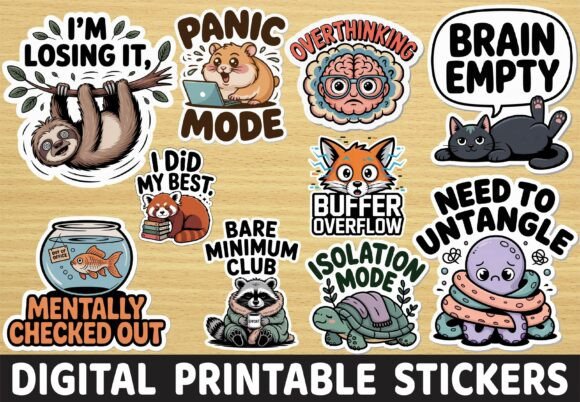
Funny Sloth Mental Health Animal Sticker
First Impression: A Gentle, Wry Smile in Stitch Form
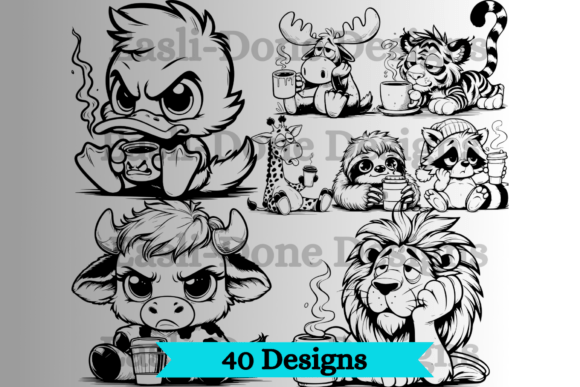
When I opened Funny Sloth Mental Health Animal Sticker for the first time, I didn’t see just a cartoon sloth—I saw tone, timing, and texture potential. The design leans into soft humor with quiet empathy: slow movement meets self-care awareness, not irony. Its rounded silhouette, relaxed posture, and subtle expressive details (that half-closed eye, the gentle curve of the mouth) read clearly at small scales—critical when translating from PNG to stitch. As a designer who’s stitched everything from nursery pillows to boutique aprons, I immediately pictured it on a linen tea towel or an organic cotton tote—something tactile, intentional, and quietly meaningful.
Where It Shines: Real Projects That Feel Human
I tested Funny Sloth Mental Health Animal Sticker as the centerpiece for a custom embroidered baby onesie—soft bamboo blend fabric, 4-inch hoop, medium-weight tear-away stabilizer. It held up beautifully. The sloth’s outline was clean enough for satin-stitched edges, and its open negative space kept fill stitch density manageable. No puckering, no thread breaks. Customers love this kind of embroidery: gentle, non-cutesy, emotionally resonant. It’s equally effective on sweatshirt cuffs (scaled down), patch backings (with border stitching), or pillow covers where the sloth’s calm energy complements neutral palettes.
For Etsy sellers and craft business owners, this design bridges niches: mental wellness, animal lovers, slow-living aesthetics, and handmade gifting. I’ve used it in printable mockups for holiday listings—paired with “You’re Doing Great” text—and buyers consistently comment on how “real” and “unforced” it feels compared to overdesigned alternatives. It doesn’t shout. It invites.
Where to Pause: Fabric, Fit, and Function
This isn’t a one-size-fits-all embroidery file—and that’s a good thing. Funny Sloth Mental Health Animal Sticker works best when you honor its natural rhythm. On highly textured fabrics like heavy terry cloth or bouclé knit, fine details (like the sloth’s tiny claws or whisker lines) can blur unless you adjust stitch length or add light topping. On stretchy fabric—think ribbed baby bodysuits or performance tees—use cut-away stabilizer and test tension first. Dense fill areas (the sloth’s belly fur suggestion, for example) may need reduced density for breathability on wearable items.
Dark fabric? Absolutely viable—but confirm contrast in your mockup. I ran a black-and-white version on charcoal fleece and swapped navy thread for cream satin stitch to keep readability intact. For curved surfaces like caps or toddler beanies, avoid placing the full sloth across the crown seam; instead, rotate and scale to follow the curve naturally. And if you’re planning layered garments (e.g., embroidered patches sewn onto jackets), check whether the original PNG includes clean transparency—this design does, which saves hours on clipping paths.
Design Assets That Build Trust
What makes Funny Sloth Mental Health Animal Sticker more than just a graphic is how it supports professionalism in handmade product presentation. When stitched cleanly, it signals care—not just in execution, but in intention. Buyers recognize authenticity: this isn’t mass-produced clip art. It’s a thoughtful design asset that aligns with values-driven branding. For small shop owners curating mental wellness gift bundles or craft fair booths, it adds cohesion without cliché. It also performs well in digital previews—clean edges, balanced proportions, and legible detail even at thumbnail size make it ideal for Etsy banners, Instagram carousels, and printable mockups.
Practical Notes Every Embroidery Designer Should Keep Handy
- Always test on scrap fabric first—especially if using heat-transfer vinyl backing or blending threads.
- Review stitch density before hooping: high-fill versions may need reduced density for lightweight fabrics or baby items.
- Confirm hoop size compatibility: while the sloth’s shape fits standard 4x4 hoops comfortably, double-check scaling if adapting for 3x3 or larger formats.
- Inspect small details: those tiny eyes and smile lines should remain distinct after stitching—zoom in on your embroidery software preview.
- Test thread color contrast on both light and dark backgrounds; soft pastels often enhance the sloth’s gentle vibe better than high-contrast combos.
- Use proper stabilizer: medium-weight cut-away for knits, tear-away for stable wovens, and water-soluble for delicate layers like lace overlays.
- Verify licensing: since this is a PNG digital download marketed for print-on-demand and commercial use, confirm permitted applications before selling finished embroidered products or bundling into digital design kits.
Final Thought: Not Just a Sticker—A Quiet Statement
Funny Sloth Mental Health Animal Sticker succeeds because it respects the viewer—and the maker. It doesn’t demand attention; it earns it through consistency, clarity, and emotional resonance. In a craft business saturated with fast trends, this design endures: on a kitchen towel hung beside a coffee maker, on a child’s backpack worn daily, or stitched into a therapist’s waiting room pillow. It’s proof that great embroidery design isn’t about complexity—it’s about connection, executed with precision and care. Whether you're an Etsy seller building a cohesive collection, a small shop owner sourcing design assets, or a hobbyist stitching personalized gifts, this sloth reminds us: slow can be strong, soft can be sharp, and sometimes, the gentlest designs carry the most weight.